
Artificial intelligence (AI) has dominated healthcare headlines — from predictive diagnostics to administrative automation. Yet as adoption accelerates, an important distinction is emerging: the future belongs not to artificial intelligence, but to augmented intelligence.
Augmented intelligence enhances human judgment rather than replacing it. It is about machines amplifying human insight, not substituting for it — a difference that determines whether technology becomes an ally or an adversary in healthcare transformation.
1. From Automation to Augmentation
In healthcare, data is abundant but fragmented, and decisions carry life-or-death consequences. While AI can detect patterns or predict risks, context still belongs to clinicians.
A model can forecast a 30-day readmission risk — but it cannot interpret the patient’s social situation, medication adherence, or nuanced clinical judgment.
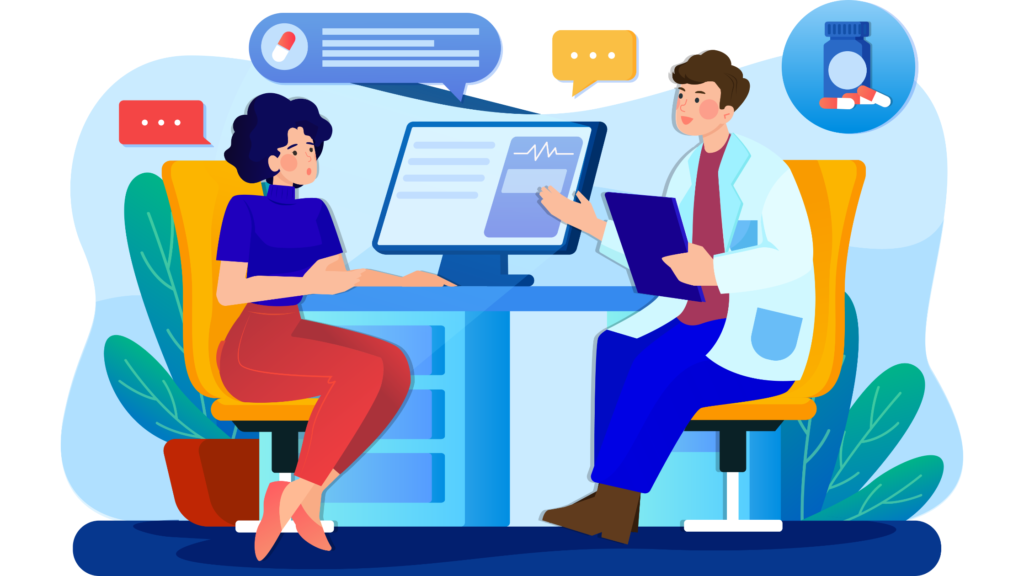
That is where augmented intelligence (AuI) enters: it combines algorithmic precision with human empathy and experience. The goal is not to automate care decisions but to strengthen them through intelligent collaboration.
Unlike “agentic AI” — systems that act independently with little human oversight — augmented intelligence keeps clinicians firmly in control. It ensures that technology serves as a copilot, not a commander.
2. Practical Use Cases Already Taking Shape
Across forward-thinking health systems, augmented intelligence is already addressing structural pain points.
From Geisinger Health to other integrated networks, these tools are reshaping how care is delivered and experienced:
a. Patient safety and monitoring
AI-enabled virtual monitoring platforms detect early signs of deterioration or fall risk — flagging issues before they escalate. This allows fewer staff to oversee more patients safely, addressing workforce shortages without compromising safety.
b. Workforce optimization
Real-time analytics can forecast patient volume and acuity, ensuring the right staffing mix across shifts. For systems battling burnout and turnover, data-driven scheduling could restore both balance and efficiency.
c. Personalized care pathways
Dynamic scheduling tools and AI-powered triage apps can guide patients to the right care setting — virtual, clinic, or emergency — based on condition severity and utilization history. This makes access smarter and reduces unnecessary visits.
d. Clinical decision support
AI-assisted tools can scan vast medical histories to surface the most relevant information and evidence-based protocols. In oncology or cardiology, this can mean faster diagnoses, optimized treatment selection, and improved first-line therapy accuracy.
Each of these applications reflects the core promise of augmented intelligence: improving the quality, safety, and personalization of care — not replacing human clinicians but empowering them.
3. The Data and Governance Challenge
Despite its promise, the path forward is not without risk.
AI models are only as strong as the data behind them — and healthcare data remains siloed, incomplete, and unevenly shared.
Without robust guardrails, automation can magnify bias or breed what experts call “automation complacency” — blind trust in machine recommendations without sufficient clinical scrutiny.
Therefore, health systems must:
- Establish transparent data governance frameworks.
- Embed human review layers in AI-assisted workflows.
- Provide ongoing education so clinicians understand both the capabilities and limits of these tools.
AI will only earn clinicians’ trust when its outcomes are explainable, auditable, and equitable.
4. Why Health Systems — Not Tech Firms — Must Lead
Technology companies can build algorithms, but health systems understand care.
That is why the responsibility for safe, ethical integration of AI must rest with system leaders — those closest to patients, workflows, and clinical realities.
To lead responsibly, systems must:
- Form multidisciplinary teams of clinicians, data scientists, and operational leaders.
- Start small, tackling high-impact, niche problems where ROI and outcomes can be measured.
- Adopt AI built for healthcare, not retrofitted from consumer or financial industries.
- Invest continuously in training and oversight, making AI adoption an evolving competency, not a one-time implementation.
When healthcare organizations shape how AI is used — rather than reacting to how it’s imposed — they ensure that innovation aligns with care quality, ethics, and patient trust.
5. The Ethical Imperative
Healthcare’s moral contract is different from any other industry.
Patients do not consent to being experiments in efficiency — they expect compassion, safety, and fairness.
To uphold that trust, health systems must:
- Safeguard privacy and consent through transparent data practices.
- Protect human oversight in every clinical decision loop.
- Align AI governance with the same rigor as clinical governance.
Augmented intelligence can make healthcare faster, smarter, and fairer — but only if we treat it as a clinical partner, not a corporate shortcut.
Final Thoughts
AI will not replace clinicians — but clinicians who use AI wisely may replace those who do not.
The challenge ahead is to make intelligence truly augmented — combining the scalability of machines with the humanity of medicine.
For that to happen, health systems must lead.
Because technology can build efficiency — but only leadership can build trust.
Follow on LinkedIn: https://www.linkedin.com/in/muhammad-ayoub-ashraf/
Visit the website for more insights: www.drayoubashraf.com
Watch on YouTube: https://www.youtube.com/@HealtheNomics