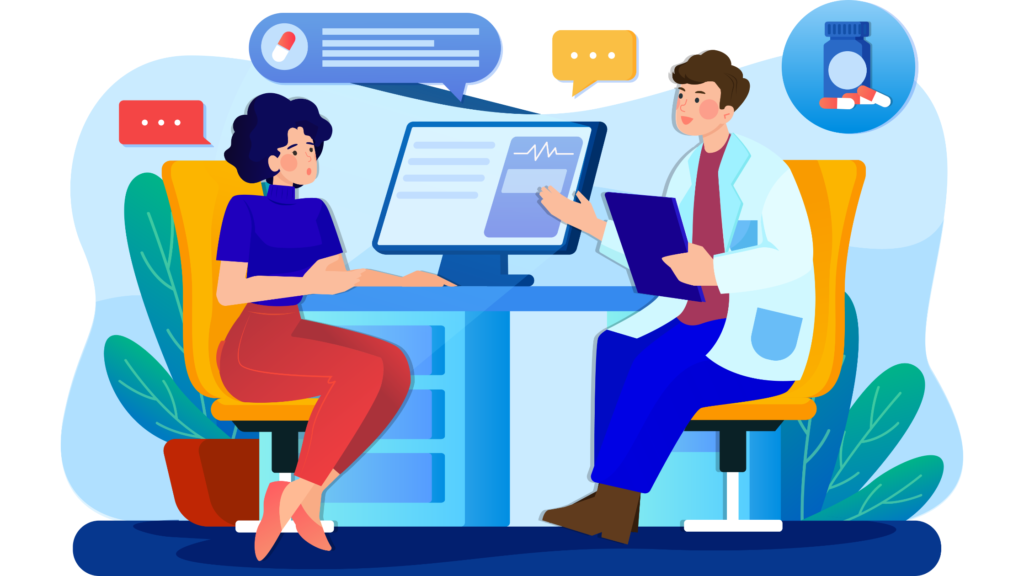

Most complex-care programs are built around adding things: a care manager, a home visit, a new care plan, another touchpoint. It is an addition-shaped instinct in a field that rewards visible activity.
For a large share of your frailest, highest-cost patients, the highest-value intervention available is subtraction — and it is sitting in a cabinet in their kitchen.
1. The scale of the exposure
About a third of people over 65 live with multimorbidity and take five or more regular medications. Over 85, that rises to roughly half.
Polypharmacy is not an edge case in the population you are accountable for — it is the norm. And hyperpolypharmacy, ten or more daily medications, affects an estimated 13% to 22% of older patients, concentrated in exactly the frail patients your care-management program is chasing.
These are not incidental prescriptions. They accumulate through rational, guideline-following care by multiple clinicians who each treat one condition well and none of whom sees the whole cabinet.
2. What the medication burden is doing to your outcomes
The literature is consistent: polypharmacy in older adults is associated with adverse drug events, drug–drug interactions, cognitive and functional impairment, falls, hospitalizations, increased healthcare costs, and mortality.
There is also a bidirectional relationship with frailty worth understanding clinically. Frailty makes patients more vulnerable to adverse drug reactions through diminished physiologic reserve, while medication burden itself has been linked to frailty indicators — weight loss, balance difficulty, functional decline. The two accelerate each other.
3. The prescribing cascade — the mechanism to look for
An adverse drug effect gets misread as a new condition, and a new medication is prescribed to treat it.
This is the pattern that turns a manageable regimen into a dangerous one. A side effect is interpreted as a new diagnosis, which generates a new prescription, which produces its own side effects. Many adverse drug events are under-recognized and then treated with more medications.
For someone reading charts with clinical training, the cascade is often visible in the record — a diuretic followed by a gout drug, an anticholinergic followed by a cognitive complaint. It is one of the clearest examples of something a claims-trained model will never flag and a clinician will spot immediately.
4. Be honest about the evidence — it makes the case stronger, not weaker
Deprescribing is not a guaranteed win, and I would not sell it as one. Several large multicentre randomized trials in hospitalized older patients with multimorbidity have failed to demonstrate consistent improvement in hard clinical endpoints, and systematic reviews have not reliably shown survival benefit from simply reducing medication counts.
The nuance the literature points to is that outcomes are driven less by the raw number of drugs than by which drugs and at what doses. That argues for targeted, clinically-informed medication review — not a blunt count-reduction exercise. Anyone promising you guaranteed savings from deprescribing is overselling; anyone ignoring medication burden entirely is missing one of the biggest modifiable risks in the panel.
5. Why this fits rising-risk identification so well
Pharmacy data is fast, structured, and close to real time — which makes medication burden one of the most operationally usable signals you have. You can identify hyperpolypharmacy, high-risk drug classes, and fall-risk-increasing drugs today, from data you already hold, without waiting for a claim.
Pair that with the impactability lesson: the patient whose deterioration is driven by an addressable medication problem is precisely the high-impact target. Frail, polypharmacy patients are simultaneously among your highest-cost and most modifiable.
Final Thoughts
Care management has a strong bias toward addition because addition is visible and billable. Subtraction is quieter and harder to get credit for, even when it is the better medicine.
As someone trained as a physician before moving into analytics and strategy, this is one of the places where the clinical lens changes what the data means. Your risk model sees a patient with many conditions. A clinician sees a patient on eleven medications, three of which may be causing the problems the other eight are treating. Identify those patients — the intervention is already in their kitchen.
If your complex-care identification runs on diagnoses and cost, you are missing the medication burden driving deterioration in your frailest patients. At HealtheNomics I help organizations bring pharmacy signal into rising-risk identification — and target the patients whose trajectory is genuinely modifiable.
Explore the services: https://healthenomics.com/services-2/
Request a strategy conversation: https://healthenomics.com/contact-us/
Connect on LinkedIn: https://www.linkedin.com/in/muhammad-ayoub-ashraf/
Website: https://www.drayoubashraf.com
Watch on YouTube: https://www.youtube.com/@HealtheNomics